PART 3 — Towards a Politics of Care and Connection
Why does so much modern-day politics seem so out of tune with a wise and compassionate view of life?

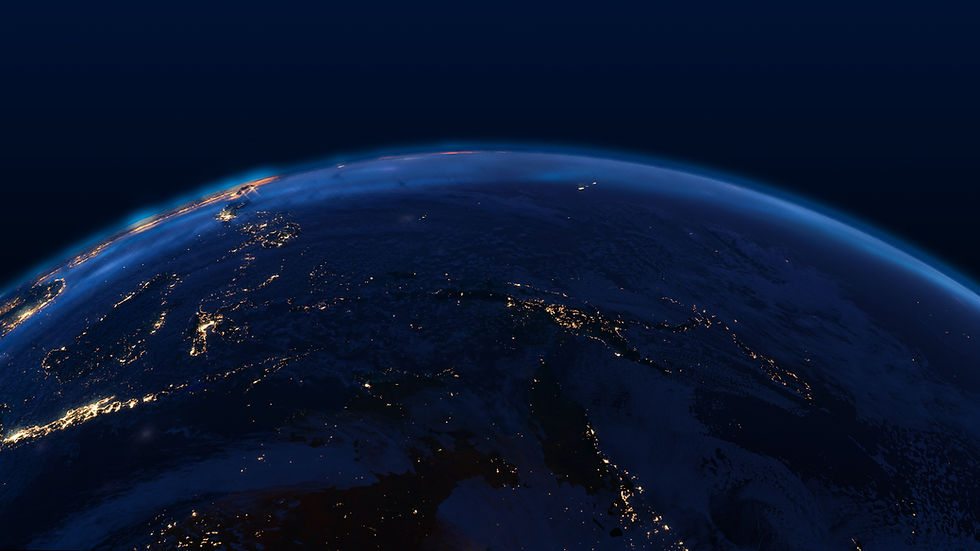
Ecologically, it is very clear that Planet Earth functions in interconnected ways. The trees give out oxygen, we breathe it in. When we pollute the rivers and oceans, we poison ourselves.
Many of us intuit that life is all one big family. Yet psychologically, fear can narrow perception and limit the sense of safety that makes collaboration and wise action more possible.
Here we are in 2026 with our political and economic systems behaving as if separation was absolutely real, as if endless growth was possible on a finite planet, and as if individual gain was unrelated to collective loss.
That’s quite a discord! Life is naturally interconnected, yet our political systems are built on pretty unrestrained individualism.
I don’t think the issue is that people can’t understand interconnection. Most of us can and do. I think the problem is that we are conditioned by a worldview of capitalist materialism. A worldview that rewards competition, exploitation, and self-interest.
When people feel afraid, survival can easily assert itself above clarity and wisdom. Acting from an awareness of interdependence can then seem risky and impractical, perhaps even stupid. When we are truly aligned with wisdom and compassion, beliefs that enable harmful actions appear not only unethical but untenable.
We are surrounded by an ever-increasing fog of information, and our states of mind can make us preoccupied, constricted and unavailable. As James Low puts it, we think “I know what I know and I know what I like” and often we don’t want to face the uncomfortable facts of life - we just want it to be nice and simple. This means that effective social change cannot rely on facts alone. It requires a willingness to stop, listen and be touched.

In other words, social change requires a dual movement - outer and inner. The outer move is structural - systems that reduce threat and reward care: fair access to housing, health, and community support; strong local services alongside genuine global cooperation; incentives for sustainability and impactful fines for environmental harm; public investment in repair, renewable energy, and regenerative economies. In short, what is needed is the development of a social world where caring for people and planet is the smart, easy option, not the heroic one.
The inner move is educational and cultural. We need schools that build resilience, ethics, and a wider sense of identity, not just technical skills. Emotional intelligence, quality time in nature, arts that cultivate empathy, and contemplative practices that help free us from the illusion of separation. When people can feel more at home and more resourceful in themselves, as well as more embedded in nature and community, they will be more able to tolerate and address the inconvenient truths of a world in crisis.
These two movements require each other. Structural reform without inner change risks compliance without care. Inner awakening without structural reform can lead to burnout or resignation. We need both the inner and outer.
For me, seeing through this lens, political choices become clearer. Populist movements that seem to thrive on fear and deregulated capitalism threaten to deepen the problems we face. Political centrism that sustains the status quo might do its best to soften injustice but is unlikely to transform it. Green politics, as imperfect and underpowered as it may currently be, appears to offer the strongest foundation for a genuine politics of care and connection - one that recognises ecological limits, community, and interconnectedness.
In conclusion I find myself returning to a simple aspiration: may what we keep becoming be a gesture of compassion. May the collective heart open, hand in hand with the sky-like mind of insightful wisdom.
If we can grow this open heart and mind inside ourselves, and embed it in our institutions, politics might cease to be such a theatre of opposition and power, and become what it could be: a collective practice of caring for the wonderful living world we all share.


Comments